Gum grafting in Herriman can help treat gum recession by covering exposed tooth roots, protecting vulnerable areas, and improving the appearance of your gumline. At MVPerio, Dr. Hegde and Dr. Thunell evaluate the cause and severity of recession to determine whether gum grafting or another periodontal treatment is appropriate for your needs.
Why Do Gums Recede as You Get Older?
Gum recession occurs when the gum tissue surrounding a tooth pulls back, exposing more of the tooth or its root. Although recession can become more noticeable with age, it is not an inevitable part of getting older.
Over time, changes in oral health, brushing habits, and periodontal tissue can contribute to recession. Understanding the cause is important because treatment should address both the exposed roots and the factors that may allow the condition to progress.
Common causes of receding gums include:
- Periodontal disease: Infection and inflammation can damage the tissues supporting your teeth and contribute to gum recession.
- Aggressive brushing: Brushing too hard or using a hard-bristled toothbrush may contribute to gum tissue damage.
- Genetics and thin gum tissue: Some people naturally have thinner gums or are more susceptible to recession.
- Teeth grinding or misalignment: Certain bite-related factors may contribute to localized gum problems and require individual assessment.
- Tobacco use and inadequate plaque control: These can increase periodontal risks and make maintaining healthy gums more difficult.
If you notice that your teeth appear longer than they used to, or you experience sensitivity near the gumline, schedule a periodontal evaluation. You can also learn more about how aging affects your teeth and gums to understand the broader changes that may affect your oral health.
What Are the Signs You May Need Gum Recession Treatment?
Receding gums do not always cause pain, which means the condition can progress without obvious warning signs. Recognizing changes early allows your periodontist to assess the affected areas and recommend appropriate care.
Watch for these common symptoms:
- Teeth that appear longer than before
- Visible tooth roots or a changing gumline
- Sensitivity to cold, hot, or sweet foods and drinks
- Notches or indentations near the gumline
- Uneven gum tissue around neighboring teeth
- Increased plaque accumulation around exposed root surfaces
Exposed roots can be more vulnerable to sensitivity and root decay because they lack the protective enamel that covers the crown of a tooth.
However, not every case of recession requires surgery. Your periodontist will consider the extent of tissue loss, your symptoms, your oral hygiene, and the health of the supporting structures before recommending treatment.
What Is Gum Grafting and How Does It Help?
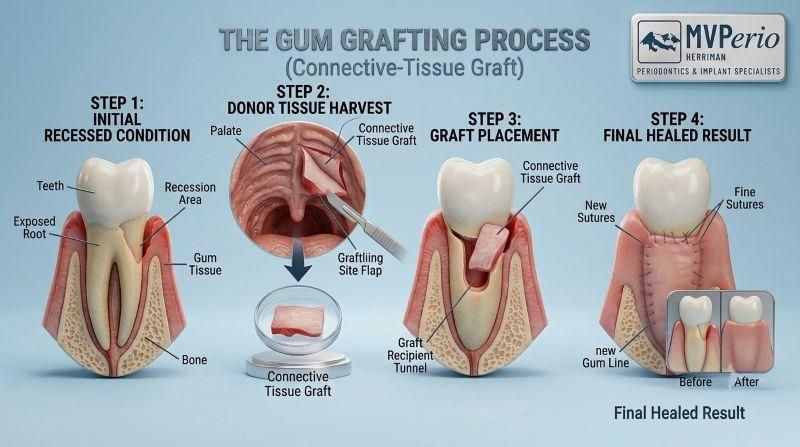
A gum graft is a periodontal procedure that adds tissue to an area where the gums have receded. Depending on your condition, the tissue may come from the roof of your mouth, another suitable source, or a donor material.
The goal is to improve tissue coverage, protect exposed roots when possible, and create a healthier, more stable gumline.
Types of gum graft procedures
Your periodontist may recommend one of several approaches:
- Connective tissue graft: Tissue is obtained from beneath the surface of the palate and placed over the area requiring treatment. This is commonly used to cover exposed roots.
- Free gingival graft: A small piece of tissue is taken from the palate and used to increase the amount of gum tissue in a specific area.
- Pedicle graft: Tissue is repositioned from the gum near the affected tooth when sufficient suitable tissue is available.
The right procedure depends on the location and severity of recession, the thickness of your existing gums, and your treatment goals.
Gum grafting may reduce root sensitivity, improve gum coverage, and help protect exposed root surfaces. The amount of coverage achieved varies, and complete root coverage cannot be guaranteed in every case.
For more information about available periodontal procedures, visit MVPerio’s page on soft tissue procedures.
Gum Graft Surgery Recovery: What Should You Expect?
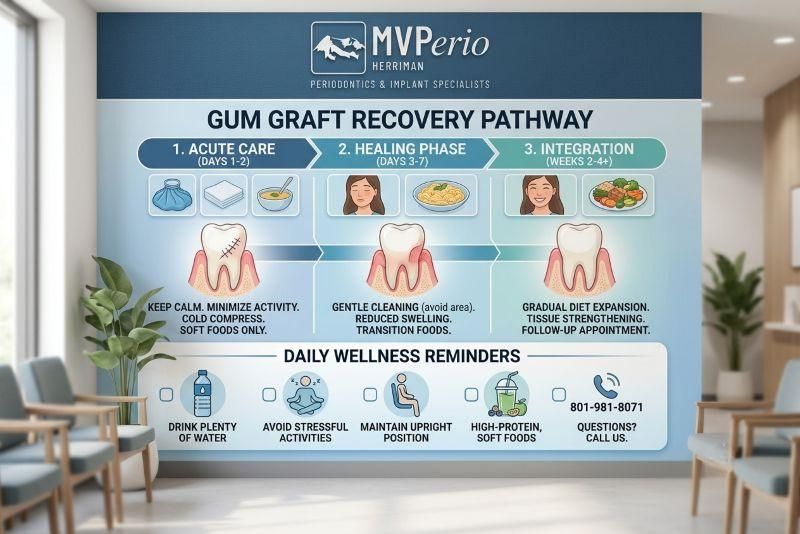
Recovery depends on the grafting technique, the size of the treated area, and your individual healing response. Your periodontist will provide instructions tailored to your procedure.
During the initial healing period, you may experience mild swelling, tenderness, or discomfort. These symptoms generally improve as healing progresses.
To support recovery:
- Follow your prescribed medication and post-operative instructions.
- Choose soft foods and avoid chewing directly on the surgical site.
- Avoid brushing or flossing the grafted area until your periodontist advises you to resume.
- Do not pull on your lip or cheek to inspect the graft.
- Avoid smoking or tobacco use, which can interfere with healing.
- Attend your scheduled follow-up appointments.
Your periodontist will explain when you can gradually return to your normal oral hygiene routine and diet. Contact the practice if you experience increasing pain, persistent bleeding, or other symptoms that concern you.
Good long-term oral hygiene and regular periodontal maintenance are also important. A graft can improve tissue coverage, but it does not eliminate the need to manage plaque, inflammation, and other factors that contribute to gum recession.
DR. Hegde’s and DR. Thunell’s Clinical Perspective at MVPerio
Dr. Hegde and Dr. Thunell approach gum recession by first identifying why the tissue has receded and whether the affected area is stable. Their clinical assessment considers gum thickness, root exposure, periodontal health, tooth position, and the patient’s ability to maintain the area after treatment.
From a clinical standpoint, the presence of recession alone does not automatically mean surgery is necessary. Some patients benefit from improved brushing techniques, professional periodontal care, or monitoring. Others may benefit from grafting when root exposure, sensitivity, tissue limitations, or specific periodontal concerns justify intervention.
Treating active periodontal disease and improving plaque control may be necessary before considering surgery. Where grafting is appropriate, the treatment plan should reflect the patient’s anatomy, healing considerations, and realistic expectations for root coverage.
At MVPerio, the goal is to help patients understand their options and make informed decisions about maintaining their periodontal health. Patients can also explore periodontal disease therapy to learn more about managing gum conditions that may affect the supporting tissues around their teeth.
Where to Get Gum Grafting in Herriman, Utah
If you have noticed receding gums, exposed tooth roots, or persistent sensitivity, a periodontal evaluation can help you understand the available treatment options.
MVPerio provides periodontal care in Herriman, Utah, including evaluation and treatment planning for patients experiencing gum recession. The first step is to determine what is causing the recession and whether gum grafting, preventive care, or another treatment is best suited to your condition.
You can learn more about the practice and its services through the MVPerio Herriman location page.
Frequently Asked Questions
Choosing a treatment for receding gums often raises questions about recovery, results, and whether surgery is necessary. Here are answers to common questions patients ask when considering periodontal care.
Q. Is gum grafting necessary for receding gums?
Not every patient with receding gums needs surgery. Gum grafting may be recommended when exposed roots, sensitivity, inadequate tissue coverage, or other clinical concerns make treatment beneficial. A periodontist can evaluate the severity of recession and discuss appropriate options.
Q. Can receding gums grow back naturally?
Gum tissue that has receded generally does not grow back on its own. Better oral hygiene can help prevent further damage, but it cannot reliably restore lost tissue. Depending on the condition, professional treatment or gum grafting may help improve coverage.
Q. Is gum graft surgery painful?
The procedure is generally performed with local anesthesia to minimize discomfort during treatment. Some tenderness, swelling, or soreness may occur afterward. Your periodontist will explain how to manage discomfort and care for the surgical site during recovery.
Q. How long does gum graft recovery take?
Initial healing often takes one to two weeks, but complete tissue healing can take longer, depending on the procedure and individual circumstances. Follow your periodontist’s instructions and attend follow-up visits to monitor recovery.
Q. How long do gum graft results last?
Gum grafts can provide long-lasting results when the tissue heals successfully and the underlying causes of recession are managed. Good oral hygiene, appropriate brushing technique, periodontal maintenance, and avoiding tobacco can help protect your results.
Q. How much does gum grafting cost in Herriman?
The cost depends on the number of teeth involved, the grafting technique, the complexity of the case, and your insurance benefits. An examination is necessary to develop a treatment plan and provide an estimate specific to your needs.
Schedule a Periodontal Evaluation at MVPerio
If your gums are receding, you do not have to guess whether treatment is necessary. A careful examination can help identify the cause, assess the condition of your gum tissue, and determine whether gum grafting or a more conservative approach is appropriate.
At MVPerio, Dr. Hegde and Dr. Thunell focus on helping patients understand their periodontal health and the options available to protect it. If you have questions about your gumline or are concerned about exposed tooth roots, contact the practice to discuss your next steps.
Phone: +1 801-871-3949
Email: herriman@mvperio.com
Address: 6351 West 13400 South #200, Herriman, UT 84096, USA
Contact MVPerio to arrange an evaluation and learn whether periodontal treatment can help you maintain healthier gums as you age.