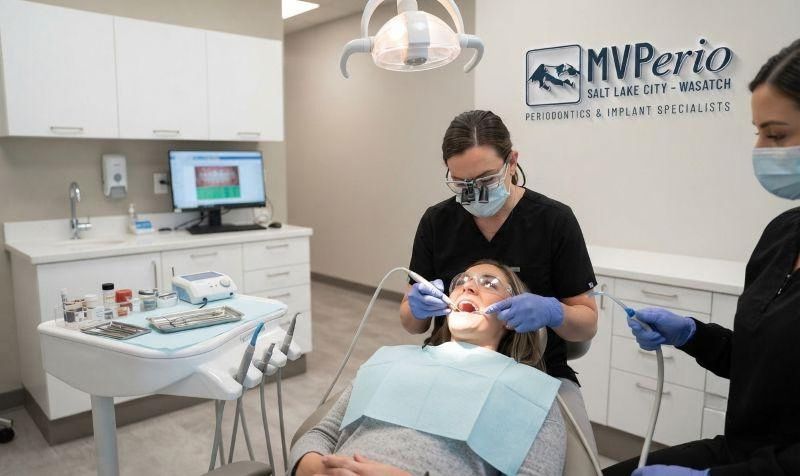
If you have persistent bleeding gums, gum recession, deep periodontal pockets, loose teeth, or signs of bone loss, you may need more than a routine dental cleaning. Periodontal therapy is tailored to the severity of gum disease and may involve non-surgical treatment, periodontal maintenance, or advanced procedures when necessary.
What Are the Signs You May Need Advanced Periodontal Treatment?
Not every gum problem requires advanced treatment. Some early concerns can improve with professional cleaning and better daily oral hygiene. However, certain signs suggest that periodontal disease may have progressed and deserves a more detailed evaluation.
- Your Gums Bleed Regularly
Occasional bleeding should not simply be dismissed as normal. If your gums frequently bleed while brushing, flossing, or eating, it may indicate ongoing inflammation caused by plaque and bacteria around the gumline.
Persistent bleeding can be a reason to schedule a periodontal evaluation, particularly when it occurs alongside swelling, tenderness, recession, or changes around the teeth.
- Your Gums Are Pulling Away From Your Teeth
Gum recession occurs when gum tissue moves away from the tooth, making more of the tooth or root visible. Recession can contribute to sensitivity and may make it easier for bacteria to collect around vulnerable areas.
If you are noticing progressive recession, a periodontist can determine whether the cause is related to periodontal disease, brushing habits, tissue characteristics, or another factor. Depending on the findings, treatment may include monitoring, periodontal care, or a soft-tissue procedure.
- You Have Deep Periodontal Pockets
Healthy gums generally fit closely around the teeth. With periodontal disease, inflammation and destruction of supporting tissues can create deeper spaces called periodontal pockets.
During an examination, these pockets can be measured to help determine the extent of periodontal disease. Deeper pockets can be more difficult to keep clean at home and may require professional treatment.
If you are looking for periodontal treatment in Salt Lake City, a periodontal evaluation can help determine whether you need non-surgical care, maintenance, or a more advanced treatment approach.
- Your Teeth Feel Loose or Have Started Shifting
Loose or shifting teeth can indicate that the tissues and bone supporting them have been affected. This does not automatically mean a tooth cannot be preserved, but it does deserve prompt evaluation.
Our goal at MVPerio is to understand why the tooth has become unstable and determine whether controlling the periodontal disease and addressing the supporting tissues can help preserve it.
- You Have Persistent Bad Breath
Persistent bad breath, particularly when it continues despite brushing, flossing, and routine cleaning, can sometimes be associated with bacterial buildup and periodontal inflammation.
Bad breath alone does not diagnose periodontal disease. However, when it occurs with bleeding gums, deep pockets, recession, or other changes, it is worth discussing with your dentist or periodontist.
- You Have Been Told You Have Bone Loss
Bone loss is an important finding because the bone surrounding your teeth provides essential support. Advanced diagnostic imaging and periodontal measurements can help your periodontist understand whether bone levels have changed and how that affects your treatment plan.
At MVPerio, evaluation may include assessment of pocket depth, bone levels, and other risk factors before treatment recommendations are made.
When Does Gum Disease Require More Than a Routine Cleaning?
A routine dental cleaning is an important part of preventive oral care, but it is not the same as treatment for established periodontal disease.
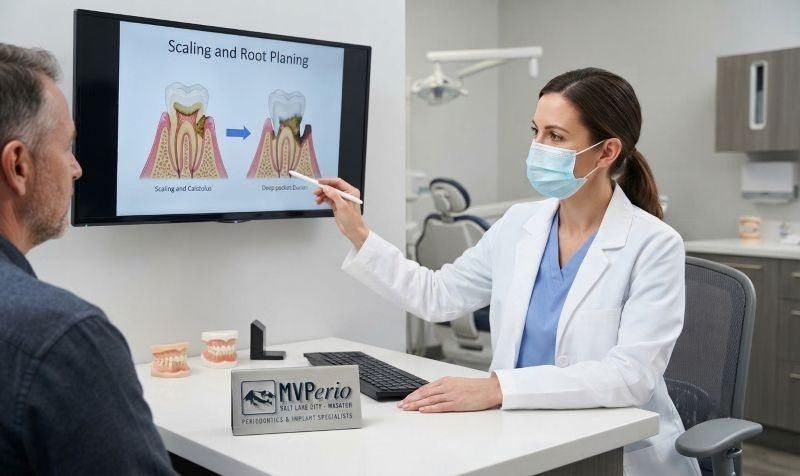
When periodontal disease progresses beyond what routine hygiene visits can address, the dentist may recommend scaling and root planing to remove plaque, tartar, and bacteria below the gumline. This non-surgical treatment removes plaque, tartar, and bacteria from affected areas and smooths the root surfaces to support healing.
If the disease is more advanced or does not respond adequately to non-surgical treatment, the dentist may consider additional periodontal procedures.
The important point is that treatment should be based on your examination findings, not simply on how your gums look or feel.
What Advanced Periodontal Treatment May Involve
The appropriate treatment depends on the condition of your gums, the depth of periodontal pockets, bone levels, and how your tissues respond to initial care.
Non-Surgical Periodontal Treatment
For many patients, treatment begins without surgery. Scaling and root planing can help dentists clean areas below the gumline that they cannot adequately reach during a routine cleaning.
Your treatment may also include personalized home-care instructions and follow-up appointments to determine how your gums respond.
Surgical Periodontal Treatment
When periodontal disease causes deeper defects or tissue damage that non-surgical treatment alone cannot adequately manage, dentists may consider surgical care.
Depending on the individual situation, periodontal procedures can include pocket-reduction treatment, regenerative procedures, bone grafting, or soft-tissue procedures.
Surgery is not automatically required simply because you have periodontal disease. The purpose of a detailed periodontal evaluation is to determine whether it is actually appropriate for your situation.
Periodontal Maintenance
Controlling periodontal disease is not necessarily a one-time process. Once you complete active treatment, your dentist may recommend periodontal maintenance to monitor your gums, control new buildup, and help maintain periodontal stability.
MVPerio describes ongoing maintenance as an important part of long-term periodontal care and uses follow-up monitoring to assess the stability of treatment.
How Do We Decide What Treatment You Need?
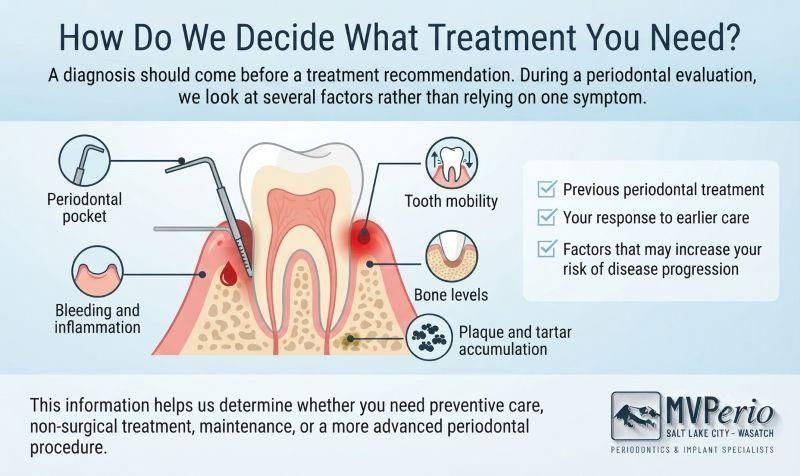
A diagnosis should come before a treatment recommendation.
During a periodontal evaluation, we look at several factors rather than relying on one symptom. These may include:
- Periodontal pocket measurements
- Gum recession
- Bleeding and inflammation
- Tooth mobility
- Bone levels
- Plaque and tartar accumulation
- Previous periodontal treatment
- Your response to earlier care
- Factors that may increase your risk of disease progression
This information helps us determine whether you need preventive care, non-surgical treatment, maintenance, or a more advanced periodontal procedure.
Dr. Hegde’s and Dr. Thunell’s Clinical Perspective
When we evaluate a patient for advanced periodontal treatment, we do not make the decision based on one isolated symptom. A patient may have bleeding gums but relatively limited disease, while another patient may have very few symptoms despite significant periodontal changes.
Our clinical approach is to look at the complete picture: pocket depths, tissue condition, bone levels, tooth stability, previous treatment, and how the disease is behaving over time.
We also believe treatment should be as conservative as reasonably possible. If non-surgical care can adequately control the disease, there may be no reason to move to surgery. If the clinical findings show that additional treatment is necessary, we explain why and discuss the available options with you.
For us, the goal is not simply to treat today’s symptoms. It is to help you understand what is happening with your periodontal health and create a plan that supports long-term stability and natural tooth preservation.
Why Consider MVPerio for Periodontal Care in Salt Lake City?
If you live in Salt Lake City and have been experiencing persistent gum problems, a periodontal evaluation can help clarify whether you need additional treatment.
MVPerio’s Salt Lake City location provides specialist periodontal care, including periodontal disease therapy, scaling and root planing, bone grafting, soft-tissue procedures, and periodontal maintenance.
Rather than assuming that every patient needs the same procedure, we use clinical findings to develop an individualized treatment plan and explain the reasoning behind our recommendations.
Frequently Asked Questions
If you are searching for answers about gum disease symptoms or specialist treatment, these are some of the questions we commonly hear from patients.
Q. What are the signs that I need advanced periodontal treatment?
Signs can include persistent bleeding gums, deep periodontal pockets, gum recession, loose or shifting teeth, persistent inflammation, and evidence of bone loss. A dental professional needs to conduct a periodontal examination to determine whether advanced treatment is appropriate.
Q. Is periodontal therapy always surgical?
No. Many patients begin with non-surgical care such as scaling and root planing. Doctors consider surgical treatment when the clinical condition requires it or when non-surgical treatment does not adequately control the disease.
Q. Is scaling and root planing enough to treat gum disease?
It can be sufficient for some patients, particularly when periodontal disease is early or moderate. However, the response varies. Follow-up evaluation helps us determine whether we need additional treatment or ongoing maintenance.
Q. Can gum disease cause loose teeth?
Yes. Advanced periodontal disease can damage the tissues and bone that support teeth, which can contribute to tooth mobility. Before deciding what treatment is appropriate, we should evaluate the cause and extent of mobility.
Q. How do I know if I need a periodontist in Salt Lake City?
Consider a periodontal evaluation if you have persistent bleeding, gum recession, deep pockets, loose teeth, inflammation, bone loss, or disease.
Q. Can periodontal disease be controlled after treatment?
Periodontal disease can require ongoing monitoring even after active treatment. A personalized maintenance program, professional care, and consistent home oral hygiene can help support long-term periodontal health.
Take the Next Step for Your Gum Health
If you notice bleeding, recession, loose teeth, inflammation, or periodontal disease concerns, start with an evaluation rather than assessing severity yourself.
We’ll assess your periodontal health, explain our findings, and help determine whether you need maintenance, non-surgical care, or advanced treatment.
Phone: +1 801-272-4867
Email: saltlakecity@mvperio.com
Address: 4252 S. Highland Dr., 101, Salt Lake City, Salt Lake City – 84124, UT, USA
If you are concerned about your gums, contact our Salt Lake City team to arrange a periodontal evaluation and take the next step with a clear understanding of your treatment options.