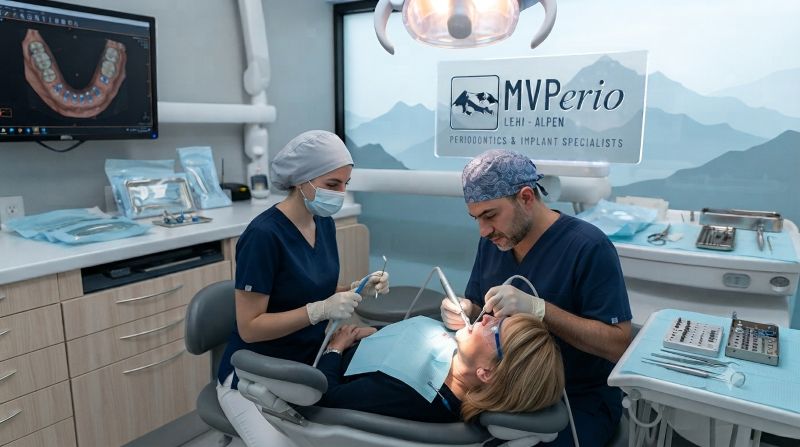
Deep teeth cleaning is a non-surgical treatment used to remove plaque and hardened tartar from below the gumline when gum disease has affected the tissues supporting your teeth. The procedure, commonly called scaling and root planing, cleans the tooth roots and helps create a healthier environment for your gums to heal.
What Is Deep Teeth Cleaning?
Deep teeth cleaning is a periodontal treatment designed to remove plaque, tartar, and bacteria from areas that a regular dental cleaning cannot reach. When gum disease causes the gums to pull away from the teeth, spaces called periodontal pockets can develop around the teeth. These pockets allow bacteria and deposits to collect below the gumline.
Unlike a routine cleaning, scaling and root planing focuses on both the visible tooth surfaces and the areas below the gums.
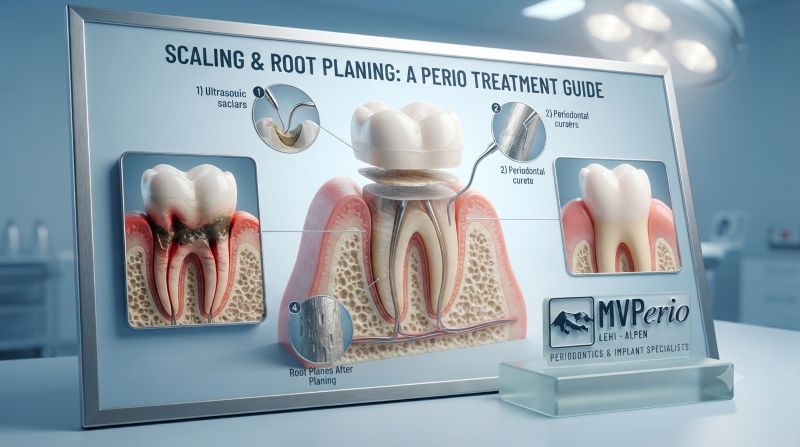
Scaling removes plaque and tartar from the tooth surfaces and beneath the gumline. Root planing carefully cleans and smooths the exposed root surfaces so the gums have a healthier environment in which to heal.
At MVPerio, treatment is based on your periodontal examination rather than simply the amount of tartar present. Your gum pocket measurements, bleeding, inflammation, recession, tooth mobility, and bone levels all help determine whether periodontal treatment is appropriate.
You can learn more about MVPerio’s periodontal and implant services and the different treatments available for gum health.
When Do You Need a Deep Dental Cleaning?
A deep dental cleaning may be recommended when gum disease has progressed beyond the stage that a routine cleaning can effectively manage.
Common signs that may indicate the need for periodontal evaluation include:
- Bleeding gums when brushing or flossing
- Red, swollen, or tender gums
- Persistent bad breath
- Gum recession
- Teeth that appear longer because the gums have receded
- Increased spaces between teeth
- Loose or shifting teeth
- Deeper periodontal pockets
- Evidence of bone loss around the teeth
However, symptoms alone do not determine whether you need treatment. Some forms of periodontal disease can progress with few noticeable symptoms.
MVPerio’s periodontal disease therapy focuses on identifying the extent of gum disease and developing treatment based on the condition of your gums and supporting bone.
What Happens Before Deep Teeth Cleaning?
Before treatment begins, your periodontist will evaluate the condition of your gums and the structures supporting your teeth.
This may include:
- Measuring the depth of periodontal pockets
- Checking for bleeding and inflammation
- Evaluating gum recession
- Assessing tooth mobility
- Reviewing dental X-rays when necessary
- Evaluating bone levels
- Discussing your oral hygiene routine and medical or dental history
These findings help determine whether scaling and root planing is appropriate and which areas require treatment.
Treatment does not necessarily involve every tooth. Depending on your periodontal findings, your periodontist may recommend treatment for specific areas of the mouth.
Local anesthesia may also be used to improve comfort during treatment. At MVPerio, comfort options can be discussed with you before your procedure so you understand what to expect.
What Happens During Deep Teeth Cleaning?
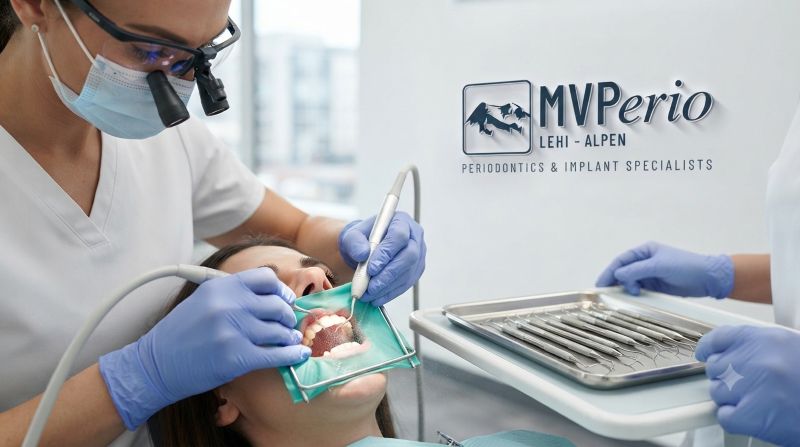
During deep dental cleaning in Lehi, the treatment generally involves two main steps: scaling and root planing.
The goal is to carefully clean the areas affected by periodontal disease while keeping the treatment as comfortable as possible.
Scaling
Scaling removes plaque and hardened tartar from the surfaces of the teeth and from below the gumline.
Specialized dental instruments are used to access areas that cannot be adequately cleaned with a toothbrush or floss. The amount of buildup and the depth of the periodontal pockets influence how much treatment is required.
Root Planing
Root planing focuses on the root surfaces beneath the gums.
The roots are carefully cleaned to remove remaining deposits and bacterial contamination. Smoothing the root surfaces can help create conditions that support gum healing.
MVPerio describes scaling and root planing as a non-surgical treatment for early and moderate gum disease. The treatment may be recommended when findings such as bleeding gums, inflammation, periodontal pocketing, or early bone loss are present.
Depending on your needs, treatment may be completed during one appointment or divided into multiple visits.
What Can You Expect After Treatment?
It is normal to experience some temporary changes after periodontal cleaning.
You may notice:
- Mild gum tenderness
- Temporary tooth sensitivity
- Minor bleeding
- Gums that appear slightly different as inflammation decreases
- Increased sensitivity to cold foods or drinks
Your periodontist will provide specific instructions based on the extent of your treatment.
Good home care becomes particularly important after treatment. Brushing gently but thoroughly, cleaning between your teeth, and following your recommended periodontal maintenance schedule can help support the results of treatment.
MVPerio also emphasizes ongoing maintenance because periodontal disease requires long-term monitoring rather than a one-time approach.
If you experience symptoms that seem unusual or become increasingly uncomfortable rather than improving, contact your dental or periodontal care team for guidance.
What Is Teeth Cleaning for Gum Disease?
Teeth cleaning for gum disease is more involved than a routine dental cleaning because it addresses plaque, tartar, and bacteria that have accumulated below the gumline.
When periodontal disease creates deeper pockets around the teeth, normal brushing and flossing may not adequately reach these areas. Professional periodontal treatment can remove these deposits and help reduce inflammation.
At MVPerio, treatment may include teeth cleaning for gum disease, with the specific approach determined by the severity and extent of your gum disease. The practice’s periodontal therapy approach includes non-surgical treatment, targeted antimicrobial care, surgical intervention when indicated, and long-term maintenance planning.
For patients who are appropriate candidates for non-surgical treatment, scaling and root planing removes plaque and tartar from below the gumline and cleans the root surfaces. MVPerio identifies scaling and root planing as a non-surgical treatment for early and moderate gum disease.
The purpose of treatment is to control the infection and inflammation associated with gum disease while creating healthier conditions for the gums to heal.
How Long Does It Take for Gums to Heal?
Healing time varies from person to person. It depends on the severity of gum disease, the amount of inflammation present, your home-care routine, smoking or tobacco use, overall health, and how your gums respond to treatment.
As inflammation decreases, the gums may become less swollen and may fit more closely around the teeth. Your periodontist may recommend a follow-up examination to evaluate how your gums have responded.
This follow-up is important because treatment does not end when the deposits have been removed. Your periodontal team needs to determine whether inflammation and pocket depths have improved and whether additional treatment or maintenance is appropriate.
Why Gum Pockets Matter?
Healthy gums generally fit closely around the teeth. When inflammation causes the gums to separate from the tooth surface, periodontal pockets can become deeper.
These pockets can be difficult to clean thoroughly at home. Bacteria and tartar may remain below the gumline, allowing inflammation to continue.
This is why teeth cleaning for gum disease is different from a routine preventive cleaning. The goal is not simply to make the teeth feel clean. The treatment is intended to address disease-causing deposits in areas that are difficult to reach with normal brushing and flossing.
Is Deep Cleaning the Same as a Regular Dental Cleaning?
No. A regular dental cleaning and periodontal deep cleaning serve different purposes.
A routine cleaning generally focuses on removing plaque, tartar, and surface stains from accessible areas of the teeth. It is primarily part of preventive dental care.
Deep periodontal cleaning, on the other hand, addresses deposits below the gumline when periodontal disease has created deeper pockets and inflammation.
The distinction is important because not everyone who has tartar needs periodontal treatment. The decision should be based on your periodontal condition and clinical findings.
MVPerio provides periodontal disease therapy that may include non-surgical periodontal therapy, antimicrobial care, surgical treatment when indicated, and long-term maintenance planning.
DR. Hegde’s and DR. Thunell’s Clinical Perspective
When we recommend periodontal cleaning, we do not make that decision based simply on how much tartar we can see.
We look at the overall condition of your gums and the supporting structures around your teeth. Pocket measurements, bleeding, inflammation, gum recession, tooth mobility, and bone levels help us understand whether active periodontal disease is present and how extensive it may be.
We also consider how well you are able to maintain your gums at home. A treatment can remove deposits, but long-term periodontal health depends on what happens afterward.
For some patients, non-surgical periodontal therapy may be enough to control inflammation and stabilize the condition. For others, additional treatment may be necessary depending on the depth of the pockets, bone loss, and response to initial therapy.
Our goal is to recommend the least complex treatment that appropriately addresses your clinical needs while helping you understand why we are recommending it.
That is also why follow-up matters. After treatment, we want to see how your gums respond rather than assuming that the initial procedure has solved everything permanently.
Frequently Asked Questions About Deep Teeth Cleaning
If you are considering periodontal treatment, it is natural to have questions about discomfort, recovery, treatment time, and long-term maintenance. Here are some of the questions we commonly hear from patients.
Q. Is deep teeth cleaning painful?
Most patients can be kept comfortable during treatment with appropriate local anesthesia. You may experience some tenderness or sensitivity afterward, but the amount of discomfort varies depending on the extent of treatment and the condition of your gums.
Q. How long does scaling and root planing take?
The treatment time depends on how many areas require treatment and how advanced the periodontal disease is. Some patients may need treatment divided across multiple appointments rather than completing the entire mouth at once.
Q. How long does it take for gums to heal after deep cleaning?
Healing varies between patients. Your gums may gradually become less inflamed after treatment, but your periodontist will usually evaluate your response during a follow-up visit before determining the next step.
Q. Can deep cleaning fix gum disease?
Teeth cleaning for gum disease can help control the bacterial deposits and inflammation associated with periodontal disease, particularly when the disease is at a stage that responds to non-surgical treatment. However, periodontal disease requires ongoing care and monitoring.
Q. Will my teeth be sensitive after deep cleaning?
Temporary sensitivity can occur after periodontal cleaning, particularly when previously covered root surfaces become exposed as inflammation decreases. Your dental team can recommend ways to manage sensitivity if it occurs.
Q. How often do I need deep dental cleaning in Lehi?
There is no universal schedule. Some patients may need periodontal maintenance after initial treatment, while others may require additional periodontal therapy based on their clinical findings. Your periodontist will recommend a schedule based on your gum health and response to treatment.
Make an Informed Decision With MVPerio
Choosing periodontal treatment should begin with understanding what is happening around your teeth and why a particular treatment has been recommended.
If you have bleeding gums, persistent gum inflammation, gum recession, deep periodontal pockets, or concerns about gum disease, an evaluation can help determine whether deep dental cleaning in Lehi is appropriate for you.
At MVPerio, Dr. Hegde and Dr. Thunell focus on periodontal health, careful diagnosis, and treatment planning based on your individual clinical findings.
To discuss your periodontal concerns or request an evaluation:
Phone: +1 801-766-6966
Email: lehi@mvperio.com
Address: 3397 N 1200 E STE 111, Lehi, UT 84043, USA
You can also explore MVPerio’s Lehi periodontal and implant care to learn more about the services available at the Lehi location.