Summary: This guide explains the types of soft tissue procedures, their benefits, recovery expectations, costs, and how a periodontist can help determine the right treatment for your needs.
Soft tissue procedures are treatments that reshape, restore, or strengthen the gum tissue around your teeth. They may address gum recession, uneven gum contours, excessive gum display, exposed tooth roots, or functional concerns. The right procedure depends on your gum health, anatomy, treatment goals, and the amount of tissue available.
What Are Soft Tissue Procedures?
The gums do more than frame your smile. Healthy gum tissue forms a protective barrier around the teeth and helps protect tooth roots and supporting structures. When gum tissue recedes, becomes uneven, or needs to be modified for restorative treatment, a periodontist may recommend a soft tissue procedure.
At MVPerio, we evaluate the gum levels, tooth structure, bone support, bite, and overall periodontal health before recommending treatment. This helps us determine whether you need gum restoration, reshaping, grafting, or another approach. Our soft tissue procedures page provides additional information about the procedures we offer.
When Might a Soft Tissue Procedure Be Recommended?
Soft tissue treatment may be considered when you have:
- Gum recession with exposed tooth roots
- Tooth sensitivity related to exposed roots
- Thin or inadequate gum tissue around certain teeth
- Uneven gum contours
- Excessive gum display
- Gum tissue that interferes with restorative treatment
- Aesthetic concerns involving the gum line
- Areas where additional protective tissue may improve long-term stability
Not every gum concern requires surgery. Sometimes periodontal treatment, improved home care, or monitoring is the more appropriate approach.
Types of Soft Tissue Procedures
There is no single soft tissue procedure that works for every patient. The technique depends on why the treatment is needed and the condition of your gum tissue.
Soft Tissue Grafting
Soft tissue grafting is commonly used to treat gum recession and increase the amount of protective gum tissue around a tooth.
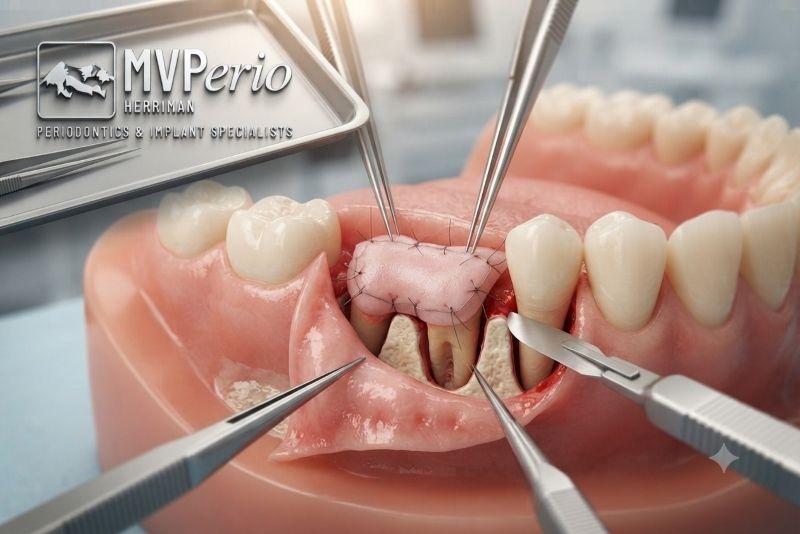
During a grafting procedure, tissue is positioned over or around an area where the gum has receded. Depending on your needs, the tissue may come from another area of your mouth or another grafting material may be considered.
The goals can include:
- Covering or protecting exposed roots
- Reducing sensitivity
- Strengthening the gum tissue
- Improving the gum line
- Helping protect vulnerable tooth surfaces
The appropriate grafting technique depends on factors such as the location and severity of recession, tissue thickness, and your individual anatomy.
Gum Reshaping
Gum reshaping changes the contour of the gum tissue to create a healthier or more balanced gum line. It may be considered when gum levels are uneven or when excess gum tissue affects the appearance or function of the smile.
Crown Lengthening
Crown lengthening removes or reshapes gum tissue, and in some cases a small amount of supporting bone, to expose more of the natural tooth.
It can have an aesthetic purpose when teeth appear short because they are covered by excess gum tissue. It can also have a restorative purpose when a dentist needs additional tooth structure exposed to properly restore a tooth.
Treatment of Excessive Gum Display
Some patients show more gum tissue when smiling than they would like. Depending on the cause, carefully planned gum reshaping can change the relationship between the teeth and gums.
The important point is that excessive gum display can have several causes. Gum tissue, tooth position, lip movement, and underlying bone can all play a role, so an examination is necessary before choosing a treatment.
Laser Soft Tissue Procedures: Are They Right for Everyone?
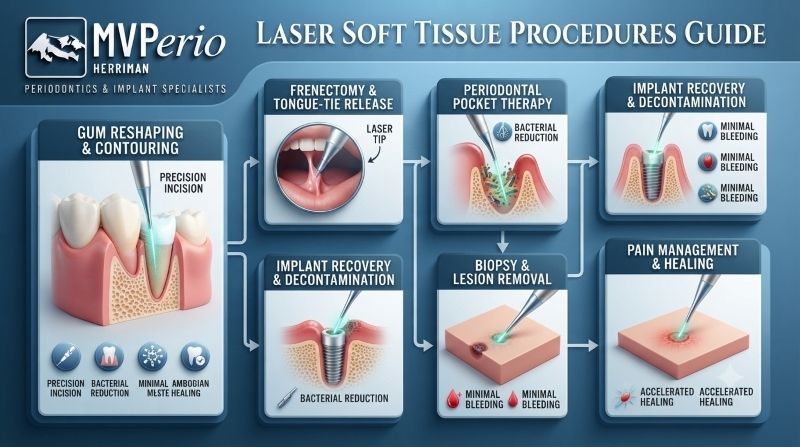
You may have heard about laser soft tissue procedures as an alternative to conventional techniques. Dental lasers can be used for certain soft tissue applications, but the fact that a procedure uses a laser does not automatically make it the best choice for every patient.
The appropriate technology depends on the condition being treated, the tissue involved, and the clinical objective. In periodontal care, the treatment method should be selected because it is appropriate for your anatomy and diagnosis—not simply because it uses newer equipment.
At MVPerio, we focus first on diagnosis and treatment planning. Technology can support treatment, but clinical judgment remains central to deciding which approach is appropriate.
Benefits of Soft Tissue Procedures
The potential benefits depend on the procedure and the reason you need treatment. For patients with gum recession, treatment may help protect exposed roots and improve the amount or quality of gum tissue around a tooth.
Depending on your situation, treatment may help:
- Protect exposed tooth roots
- Reduce sensitivity
- Improve gum tissue stability
- Create more even gum contours
- Improve smile balance
- Prepare a tooth for restorative treatment
- Address certain functional gum concerns
- Support long-term periodontal health
The goal is not simply to change the appearance of the gums. We want the result to make sense biologically and remain maintainable with good oral hygiene and regular periodontal care.
What Is Recovery Like After Soft Tissue Treatment?
Recovery varies according to the procedure, the number of treatment sites, and your individual healing response.
After treatment, you may experience some swelling, tenderness, or sensitivity around the treated area. These symptoms generally improve as healing progresses. Your periodontist will give you specific instructions based on the procedure you receive.
What Can You Expect During Recovery?
Your instructions may include:
- Keeping the surgical area clean according to your provider’s instructions
- Avoiding pressure or trauma to the treated tissue
- Eating softer foods temporarily
- Taking prescribed or recommended medications as directed
- Avoiding activities that could interfere with healing
- Attending follow-up appointments
Gum tissue continues to mature after the initial healing period, so the final appearance may take longer to develop than the first few days of recovery suggest.
If you are considering soft tissue surgery in Herriman, we recommend discussing the expected recovery before treatment. Knowing what to expect can make the process much more comfortable and predictable.
How Much Do Soft Tissue Procedures Cost?
There is no single price for soft tissue treatment because the cost depends on the procedure and the amount of treatment required.
Factors that can influence the cost include:
- Type of procedure
- Number of teeth or areas being treated
- Severity of gum recession or tissue concerns
- Grafting technique and materials
- Whether additional periodontal treatment is needed
- Complexity of the surgical site
- Follow-up care
Insurance coverage also varies by plan and procedure. Some periodontal treatments may receive benefits when they are considered medically necessary, while cosmetic procedures may have different coverage rules.
At MVPerio, we believe you should understand the recommended treatment and expected costs before moving forward. If you are comparing the cost of soft tissue surgery in Herriman, an individualized consultation is more useful than relying on a generic online price because two patients can require very different procedures.
Dr. Hegde’s and Dr. Thunell’s Clinical Perspective
When we evaluate gum tissue, we do not look at the gum line in isolation. We consider the health of the surrounding teeth, the thickness and position of the gum tissue, the supporting bone, your bite, and what we are trying to accomplish with treatment.
In our experience, the best treatment is not necessarily the most extensive treatment. If monitoring or non-surgical care is appropriate, we will tell you. If grafting or another soft tissue procedure can provide better protection or stability, we will explain why.
We also believe patients should understand the reasoning behind a recommendation. Before treatment, we want you to know what we are treating, what the procedure involves, what recovery may look like, and what alternatives are available. That conversation allows us to build a treatment plan around your clinical needs rather than applying the same approach to everyone.
Frequently Asked Questions
Soft tissue treatment can raise practical questions about candidacy, discomfort, healing, and cost. Here are answers to some of the questions patients commonly ask.
Q. Are soft tissue procedures painful?
The treatment area is numbed during the procedure, so you should not feel the surgical work itself. Some tenderness or swelling can occur afterward, and your periodontist will provide instructions to help you manage recovery comfortably.
Q. How long does it take to recover from soft tissue grafting?
Initial healing commonly occurs over the first few weeks, but the tissue can continue to mature for several months. Your recovery time depends on the grafting technique, treatment area, and individual healing response.
Q. Is soft tissue grafting only used for gum recession?
No. Soft tissue grafting is commonly used for gum recession, but periodontal soft tissue procedures can also address inadequate tissue, aesthetic concerns, and other functional or restorative needs.
Q. Are laser soft tissue procedures better than traditional techniques?
Not necessarily. Lasers can be useful for selected applications, but the appropriate technique depends on your diagnosis and anatomy. A laser is a tool, not a universal replacement for other periodontal techniques.
Q. Can I eat normally after a soft tissue procedure?
Usually, you will need to modify your diet temporarily. Your specific instructions will depend on the procedure, but softer foods and avoiding direct pressure on the treated area are commonly recommended during early healing.
Q. Does insurance cover soft tissue surgery in Herriman?
Coverage depends on your dental insurance plan and the reason for treatment. Procedures performed to address a functional or periodontal problem may be treated differently from procedures performed primarily for cosmetic reasons. Our team can help you understand the financial aspects of your recommended care.
Talk With MVPerio About Your Soft Tissue Treatment Options
If you have gum recession, exposed roots, uneven gum tissue, or another concern, we can help you understand whether treatment is appropriate and which approach makes sense for you. At MVPerio, Dr. Hegde and Dr. Thunell focus on careful diagnosis, clear explanations, and treatment plans designed around your individual periodontal needs. If you are considering soft tissue surgery in Herriman, contact our team to discuss your concerns and arrange an evaluation.
Phone: +1 801-871-3949
Email: herriman@mvperio.com
Address: 6351 West 13400 South #200, Herriman, Utah 84096, USA
Explore MVPerio‘s periodontal disease therapy to learn more about comprehensive gum health care, or review our soft tissue and aesthetic gum procedures before your consultation.