
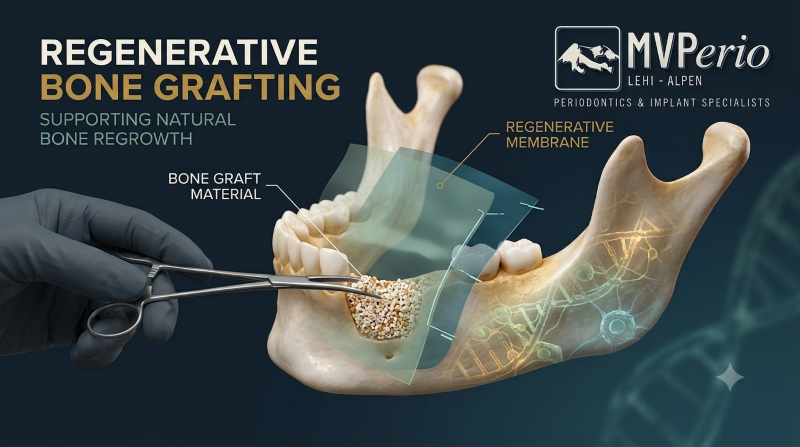
Regenerative bone grafting in Lehi is a procedure that helps rebuild or preserve jawbone lost due to gum disease, missing teeth, infection, or trauma. It may be recommended when there is insufficient bone to support a dental implant or when damaged bone needs to be restored. The procedure uses specialised grafting materials to support the body’s natural bone-forming process and create a healthier foundation for long-term oral health.
What Is Regenerative Bone Grafting in Dentistry?
Regenerative bone grafting is a periodontal procedure designed to rebuild areas of the jawbone that have deteriorated or lost volume. The grafting material acts as a framework that supports new bone formation as the area heals.
One commonly used approach is guided bone regeneration (GBR). This technique may involve placing a protective membrane over the grafted area to help guide healing and support bone development.
The choice of grafting material depends on the location and extent of bone loss, gum health, and treatment goals. You can explore MVPerio’s dental bone grafting treatment options page for more information.
What Causes Jawbone Loss?
Jawbone loss can develop gradually, sometimes without noticeable symptoms. Common causes include:
- Missing teeth: The jawbone may gradually shrink when it no longer receives stimulation from natural tooth roots.
- Advanced periodontal disease: Infection and inflammation can damage the bone supporting the teeth.
- Dental infections: Certain untreated infections can affect the surrounding jawbone.
- Tooth extraction: Bone changes naturally occur after tooth removal, particularly when the extraction site is not preserved.
- Trauma: Injuries affecting the teeth or jaw may damage underlying bone.
Identifying the cause helps a periodontist determine the appropriate treatment.
When Is Regenerative Bone Grafting in Lehi Needed?
A periodontist may recommend treatment when an examination shows that the jawbone needs additional support or reconstruction. Common situations include:
- Insufficient bone for dental implants: Implants require adequate bone volume and quality for proper placement and stability.
- Periodontal bone defects: Certain defects caused by gum disease may benefit from regenerative procedures.
- Bone preservation after extraction: Socket preservation may help limit bone loss following tooth removal.
- Jawbone reconstruction: Patients with significant bone deficiencies may need ridge augmentation before restorative treatment.
Not everyone with bone loss requires grafting. The recommendation depends on the patient’s oral health, medical history, and long-term treatment needs.
How Does the Regenerative Bone Grafting Procedure Work?
The procedure is planned according to your individual condition. It generally involves four stages.
1. Initial Examination and 3D Imaging
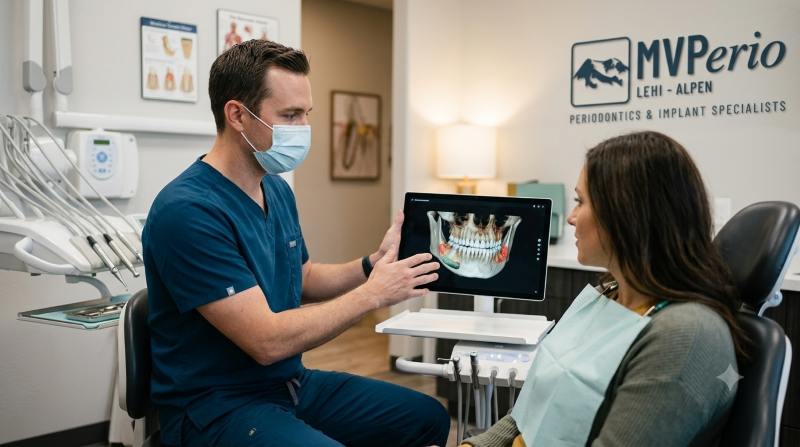
The periodontist examines your teeth, gums, and jawbone. When appropriate, CBCT imaging provides a three-dimensional view of the jaw, helping assess bone dimensions and plan treatment.
2. Preparing the Treatment Area
The affected area is carefully accessed and prepared. If infection or damaged tissue is present, it may need to be addressed before placing the graft.
3. Placing the Bone Graft Material
The selected grafting material is placed where additional bone support is needed. Depending on the case, a protective membrane may also be used to support healing.
Common materials include:
- Autogenous bone: Bone taken from another area of the patient’s body.
- Allograft: Processed bone obtained from a human donor.
- Xenograft: Bone-derived material from another species, commonly bovine.
- Synthetic grafts: Biocompatible materials designed to support bone regeneration.
4. Healing and New Bone Formation
The grafted area is allowed to heal. The material supports the body’s natural bone-forming process, and the periodontist monitors progress through follow-up visits. Dental implant placement may be considered once sufficient healing has occurred.
What Are the Benefits of Regenerative Bone Grafting?
When clinically appropriate, jawbone regeneration can offer several benefits:
- Helps rebuild areas affected by bone loss.
- Creates a more suitable foundation for future dental implants.
- Helps preserve jawbone structure following selected extractions.
- Supports surrounding teeth and restorative treatments.
- Expands treatment options for patients with insufficient bone volume.
Results vary depending on the extent of bone loss, oral hygiene, treatment technique, and individual healing. Bone grafting does not guarantee that every patient will become suitable for dental implants.
What Is the Recovery Time After Bone Grafting?
Recovery depends on the size and location of the graft, the technique used, and your overall healing response. Mild swelling, tenderness, or discomfort may occur initially.
During recovery, you should:
- Follow prescribed medication and post-operative instructions.
- Avoid disturbing the surgical area.
- Choose appropriate foods as advised.
- Maintain oral hygiene without irritating the treated area.
- Attend scheduled follow-up appointments.
Initial healing takes place over the first few weeks, while bone maturation may require several months. Your periodontist will assess the graft before recommending further treatment.
Dr. Hegde and Dr. Thunell Clinical Perspective
Dr. Rachna Hegde and Dr. Dan Thunell approach bone regeneration by first identifying why the bone was lost and what the patient needs from treatment. Their clinical assessment considers bone volume, bone quality, gum health, and the long-term requirements of planned dental restorations.
For patients considering implants, they evaluate whether existing bone can support placement or whether additional grafting is appropriate. They also consider whether periodontal disease needs to be controlled before regenerative treatment.
Their approach focuses on accurate diagnosis, evidence-based treatment selection, and realistic healing expectations. The objective is to create conditions that support long-term oral health rather than simply replace lost tissue.
Why Choose MVPerio for Bone Grafting in Lehi?
At MVPerio, patients receive specialist periodontal and implant care guided by individual diagnosis and treatment planning. Dr. Rachna Hegde, a dual board-certified periodontist, leads the Lehi location, with specialised experience in gum health, dental implants, and advanced surgical care.
The team uses diagnostic imaging, including CBCT when appropriate, to evaluate jawbone structure and plan treatment. Patients also receive clear explanations about their recommended procedure, recovery, and possible next steps.
If you need bone grafting for dental implants, a specialist evaluation can help determine whether additional bone support is necessary and which approach is appropriate.
Frequently Asked Questions About Regenerative Bone Grafting
Understanding the procedure, recovery, and treatment options can help you feel more prepared for a consultation. Here are answers to common patient questions.
Q. Is regenerative bone grafting painful?
The procedure is performed with appropriate local anaesthesia, so you should remain comfortable during treatment. Some tenderness, swelling, or discomfort may occur afterward. Your periodontist will provide instructions to manage recovery.
Q. How long does it take for a dental bone graft to heal?
Initial healing may take a few weeks, while the grafted area can require several months to mature. The timeline depends on the graft size, location, and individual healing. Read more about the dental bone graft healing process to understand how healing and long-term implant maintenance relate to restorative treatment.
Q. Can you get dental implants after regenerative bone grafting?
Yes. Many patients can receive dental implants after successful graft healing. However, placement depends on whether sufficient bone volume and quality have developed. Your periodontist will evaluate the site before proceeding.
Q. What materials are used in regenerative bone grafting?
Common materials include autogenous bone, processed donor bone, animal-derived bone, and synthetic graft materials. The appropriate option depends on the treatment area and clinical requirements.
Q. Is bone grafting necessary for every dental implant?
No. Many patients already have sufficient jawbone for implant placement. However, patients with inadequate bone volume may benefit from grafting before implant surgery.
Q. Can gum disease cause jawbone loss?
Yes. Advanced periodontal disease can damage the bone and supporting tissues around the teeth. Treating the infection and controlling inflammation are important before considering regenerative treatment. Patients can also explore periodontal disease and gum health treatment to understand the importance of managing gum conditions.
Discuss Your Bone Grafting Options with MVPerio in Lehi
If you have been told that you have jawbone loss or may need a bone graft before dental implants, the next step is to understand your treatment options. Dr. Hegde and Dr. Thunell believe that treatment decisions should begin with a careful examination, a clear explanation, and a plan suited to your long-term oral health.
Phone: +1 801-766-6966
Email: lehi@mvperio.com
Address: 3397 N 1200 E STE 111, Lehi, UT 84043, USA
At MVPerio, our goal is to help you understand whether regenerative treatment is appropriate and what you can realistically expect. Contact our Lehi office to schedule an evaluation.