
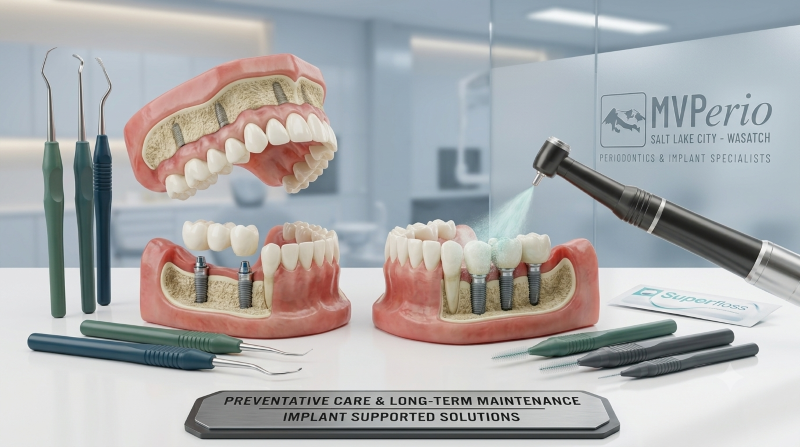
Dental implant maintenance involves daily oral hygiene, healthy gum care, and regular professional examinations to monitor the tissues supporting your implants. Although dental implants are designed to replace missing teeth, they still need consistent attention. Brushing carefully, cleaning between teeth, and addressing early signs of inflammation can help maintain implant health and identify potential complications before they progress.
Why Is Dental Implant Maintenance Important?
Dental implants replace missing tooth roots with artificial posts that support replacement teeth. However, the gums and bone surrounding an implant remain living tissues that can develop inflammation and other problems.
Unlike natural teeth, implants do not develop tooth decay. However, plaque can accumulate around their surfaces and irritate the surrounding gums. If inflammation is not addressed, it may affect the supporting bone.
Consistent care helps patients:
- Maintain healthy gum tissue around implants.
- Reduce plaque accumulation.
- Identify inflammation at an early stage.
- Monitor the condition of supporting bone.
- Maintain the function of implant-supported restorations.
If you are considering implants or already have them, understanding how long dental implants really last can also help you understand why ongoing care matters.
How to Clean and Care for Dental Implants at Home
A consistent cleaning routine is one of the most important parts of dental implant care. The goal is to clean around the implant, along the gumline, and beneath implant-supported restorations where food particles and plaque may collect.
Brush Your Dental Implants Regularly
Brush at least twice daily using a soft-bristled toothbrush and fluoride toothpaste. Pay attention to the area where the implant-supported crown meets the gumline.
Use gentle movements rather than applying excessive pressure. Aggressive brushing may irritate the gums and contribute to tissue recession.
An electric toothbrush may also be suitable, depending on your oral health needs and personal preference.
Clean Between Your Implants
A toothbrush cannot reach every surface between teeth or around implant-supported restorations. Interdental brushes, dental floss, or other implant-specific cleaning aids may help remove plaque from these areas.
The appropriate cleaning method depends on the position of your implants and the type of restoration attached to them. Ask your dental professional to demonstrate the correct technique.
Maintain a Consistent Oral Hygiene Routine
Daily cleaning should be supported by healthy habits, including a balanced diet and avoiding tobacco products. If you have a removable implant-supported restoration, follow the cleaning and handling instructions provided by your dental team.
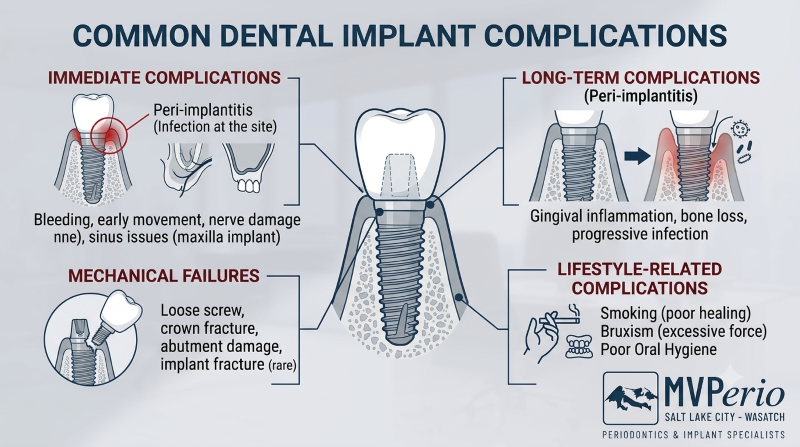
Common Dental Implant Complications Patients Should Know About
Even with regular cleaning, complications can sometimes develop. Recognising the difference between soft-tissue inflammation and problems involving the supporting bone is important.
Peri-Implant Mucositis
Peri-implant mucositis refers to inflammation of the soft tissue surrounding a dental implant. Common signs include redness, swelling, and bleeding during brushing or cleaning.
At this stage, the inflammation has not caused detectable supporting bone loss beyond normal initial remodelling. Professional assessment and appropriate plaque control can help manage the condition.
Peri-Implantitis
Peri-implantitis is an inflammatory condition affecting the tissues around a dental implant and is associated with progressive supporting bone loss.
Possible signs include bleeding, swelling, pus discharge, and changes in the gum tissue around the implant. Diagnosis requires a clinical examination and assessment of bone levels, often using dental imaging.
Treatment depends on the severity of the condition and may involve professional cleaning, infection control, or surgical management in selected cases.
Implant Loosening or Mechanical Complications
A loose implant-supported crown does not necessarily mean that the implant itself has failed. Sometimes, the problem involves a screw, attachment, or other component of the restoration.
However, any unusual movement, discomfort, or change in chewing should be examined. Avoid attempting to tighten or adjust the restoration yourself.
Warning Signs That Your Dental Implant Needs Professional Attention
Pay attention to changes around your implant, particularly if they persist or become more noticeable.
Contact your dental professional if you experience:
- Bleeding around the implant during brushing.
- Persistent gum redness or swelling.
- Pus or unusual discharge.
- Gum recession around the implant.
- Discomfort while chewing.
- Changes in the stability of the implant-supported crown or bridge.
These symptoms do not automatically indicate implant failure. However, an examination can help identify the underlying cause and determine whether treatment is necessary.
How Often Should You Visit Your Dentist for Dental Implant Maintenance?
There is no single appointment schedule that suits every implant patient. The recommended frequency depends on gum health, previous periodontal disease, plaque control, medical history, and the condition of the implant-supported restoration.
During follow-up appointments, your dental professional may:
- Examine the gums surrounding the implant.
- Check for bleeding, inflammation, and changes in tissue condition.
- Assess implant and restoration stability.
- Review bite forces and chewing function.
- Measure periodontal or peri-implant tissue health when indicated.
- Use dental imaging when clinically necessary to evaluate supporting bone.
Patients with a history of gum disease or previous implant complications may need closer monitoring. Your dentist or periodontist can recommend an appropriate maintenance schedule based on your examination findings.
What Factors Can Increase the Risk of Dental Implant Complications?
Several factors can influence the health of tissues surrounding an implant.
Smoking and Tobacco Use
Smoking can affect blood supply, tissue healing, and the body’s response to inflammation. Tobacco use may increase the risk of periodontal and peri-implant complications.Existing Gum Disease
A history of periodontal disease is an important consideration when planning and maintaining implants. Active gum inflammation should be evaluated and managed appropriately.
Learn more about periodontal disease therapy and why maintaining healthy gum tissue matters.
Poor Oral Hygiene
Inconsistent brushing and inadequate cleaning between teeth can allow plaque to accumulate around implants. Over time, this may contribute to inflammation of the surrounding tissues.
Teeth Grinding and Excessive Bite Pressure
Clenching and grinding can place additional forces on implant-supported restorations. If you notice signs of grinding or changes in your bite, discuss them with your dental professional.
DR. Hegde’s and DR. Thunell’s Clinical Perspective: Maintaining Dental Implants at MVPerio
Dr. Hegde and Dr. Thunell approach long-term implant care by considering more than the implant itself. The condition of the surrounding gums, supporting bone, bite forces, and implant-supported restoration all contribute to the overall clinical assessment.
Their periodontal perspective places particular importance on identifying inflammation and evaluating changes in the tissues supporting an implant. When a patient reports bleeding, discomfort, or changes in the restoration, the next step is to determine the cause rather than assume that the implant has failed.
At MVPerio, implant-related evaluations consider individual clinical findings, including gum health, bone levels, and restoration stability. Where appropriate, dental implant care may involve coordination with the patient’s restorative dentist to address both the supporting tissues and the prosthetic components.
Frequently Asked Questions About Dental Implant Maintenance
Maintaining an implant can raise practical questions, especially several years after placement. Here are answers to common questions about everyday care and potential complications.
Q. How often should dental implants be professionally cleaned?
The frequency depends on your gum health, implant condition, and individual risk factors. Your dental professional can recommend a maintenance schedule after examining the implant and surrounding tissues.
Q. Can dental implants develop gum disease?
Dental implants cannot develop tooth decay, but the surrounding gum tissue can become inflamed. Peri-implant mucositis and peri-implantitis are two conditions that may affect implant-supporting tissues. Learn more about periodontal disease therapy.
Q. What is the best way to clean dental implants at home?
Brush twice daily with a soft-bristled toothbrush and clean between teeth using an appropriate interdental cleaning aid. Your dental professional can demonstrate dental implant care techniques suited to your restoration.
Q. Can peri-implantitis cause dental implant failure?
It can. Peri-implantitis involves inflammation and progressive supporting bone loss, which may compromise implant stability if the condition progresses. Early evaluation can help determine appropriate management.
Q. Do dental implants require maintenance after several years?
Yes. Implants continue to require daily cleaning and periodic professional examinations even after several years. Regular monitoring helps assess the condition of the surrounding tissues and restoration.
Maintaining Your Dental Implants for Long-Term Oral Health
Dental implants require ongoing attention, just like the rest of your oral health. A consistent cleaning routine, healthy gums, and regular professional examinations can help identify concerns and guide appropriate care.
At MVPerio, Dr. Hegde and Dr. Thunell consider the health of the supporting tissues when evaluating dental implants. If you have noticed bleeding, swelling, discomfort, or changes around an existing implant, an individual periodontal assessment can help clarify what is happening and what steps may be appropriate.
Phone: +1 801-272-4867
Email: saltlakecity@mvperio.com
Address: 4252 S. Highland Dr., 101 Salt Lake City – 84124, Utah, USA
The right maintenance approach starts with understanding your individual oral health needs.