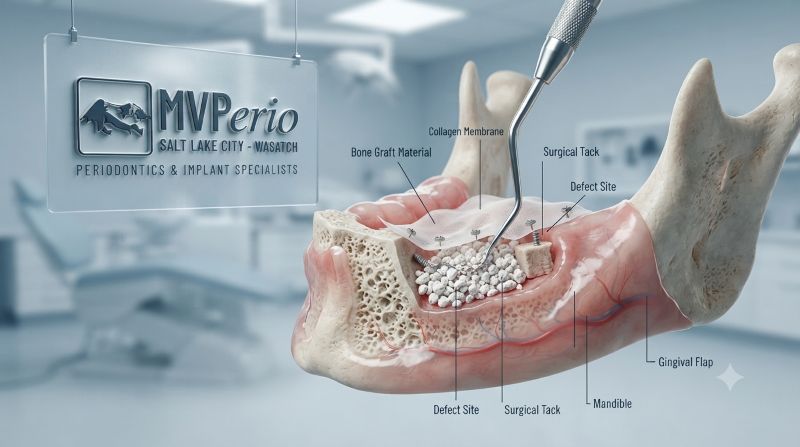
If you are considering bone grafting, one of the most common questions we hear is, “How long will it take to heal?” The early recovery period is usually much shorter than the time needed for the graft to fully integrate with your natural bone. Understanding the bone graft healing time can help you know what to expect at each stage and when you may be ready for a dental implant.
What Is Bone Grafting?
A dental bone graft is a procedure used to rebuild or preserve bone in an area where the jawbone has lost volume. Bone loss can occur after tooth loss, periodontal disease, infection, trauma, or other conditions that affect the supporting structures of your teeth.
A graft may be placed after a tooth extraction, before a dental implant, or in an area where bone has been lost because of periodontal disease. The exact approach depends on the amount and location of bone loss, your oral health, and your long-term treatment goals.
At MVPerio, our periodontists evaluate your bone volume, bone quality, gum health, and overall treatment needs before recommending a graft. This helps us choose an approach that supports both healing and your future dental treatment.
How Long Does a Bone Graft Take to Heal?
The answer depends on the type and size of the graft and where it was placed.
The soft tissues around the surgical area often begin healing within the first several days, and many patients feel significantly better within one to two weeks. However, the deeper bone healing process takes considerably longer.
A dental bone graft may require several months to fully integrate with your existing bone. Smaller grafts may heal sooner, while larger grafts or more complex procedures can require a longer healing period. Your periodontist will monitor the graft during follow-up appointments and determine when it is ready for the next stage of treatment.
This means bone graft recovery has two different parts: the initial recovery that you can feel and the deeper biological healing that continues underneath the gum tissue.
Bone Grafting Healing Timeline: What to Expect
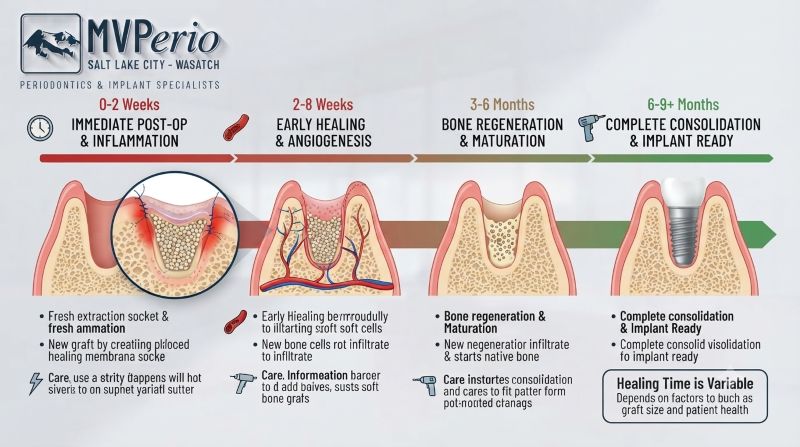
Every patient heals differently, but the following timeline gives you a general idea of what the bone graft healing stages may look like.
First 24–72 Hours
The first few days are generally focused on protecting the surgical area and controlling swelling or discomfort.
You may experience:
- Mild to moderate soreness
- Swelling around the treatment area
- Some bruising
- Minor bleeding or oozing
- Sensitivity when eating or opening your mouth
Your periodontist will provide specific instructions for protecting the graft. Keeping the area undisturbed during this early period is important.
It is also common for swelling to be more noticeable during the first few days before it gradually begins to improve.
Days 4–7
By the end of the first week, many patients notice that their discomfort and swelling are beginning to decrease.
You may gradually feel more comfortable eating and returning to normal daily activities, depending on the type of procedure you had.
However, the graft is still healing beneath the gum tissue. Feeling better does not mean the bone has completely healed.
Continue following your post-operative instructions and avoid anything that could disturb the surgical area.
Weeks 2–4
During weeks two through four, the soft tissue is generally much further along in the healing process.
You may have little or no discomfort at this stage, but the deeper graft is still undergoing changes as your body works to incorporate the graft material.
This is an important distinction when thinking about your dental bone graft healing time. The gum may look healed before the underlying bone has finished developing.
Months 1–3
During the first several months, the deeper bone-healing process continues.
The graft gradually becomes integrated with the surrounding bone, creating a stronger foundation for future treatment.
Depending on your procedure, your periodontist may use follow-up examinations and imaging to determine how the area is progressing.
If the graft was performed to prepare for a dental implant, the timing of implant placement will depend on how much bone has developed and whether the site is clinically ready.
Three Months and Beyond
Some grafts may be ready for the next stage of treatment after several months, while larger or more complex grafts can require longer.
There is no single bone graft recovery timeline that applies to everyone.
For some patients, a smaller graft may require less healing time. More extensive ridge augmentation or other advanced grafting procedures may require several additional months before implant placement is appropriate.
The goal is not simply to wait a certain number of weeks. The goal is to confirm that the graft has developed enough stable bone for the next stage of treatment.
What Factors Affect Bone Graft Healing Time?
Several factors can influence your bone graft healing time, including:
Size and Location of the Graft
A small graft used to preserve the bone after an extraction may heal differently from a larger graft used to rebuild a significant area of bone loss.
Type of Graft Procedure
Different procedures are used for different clinical situations. MVPerio provides several grafting approaches, including socket preservation, ridge augmentation, and guided bone regeneration.
Your Oral Health
Healthy gums and good control of periodontal disease are important parts of successful healing. Active gum disease can affect the tissues and bone supporting your teeth, so periodontal health should be considered as part of your treatment plan.
Smoking and Tobacco Use
Smoking and tobacco use can interfere with healing and increase the risk of complications after oral surgery. Your periodontist may recommend avoiding tobacco before and after your procedure.
Your Individual Healing Response
Your general health, the complexity of the procedure, and how closely you follow post-operative instructions can all affect your recovery.
For these reasons, we do not recommend comparing your recovery too closely with someone else’s. Your treatment plan should be based on your own clinical situation.
What Is Normal During Bone Graft Recovery?
Knowing what is normal can make recovery much less stressful.
During the first several days, some bone graft pain and swelling are expected. These symptoms should generally begin to improve rather than progressively worsen.
You may also experience some tenderness when chewing or touching the area.
Following your post-operative instructions, taking prescribed or recommended medications as directed, maintaining appropriate oral hygiene, and protecting the surgical site can help support a smooth recovery.
If you are concerned about your symptoms or something does not feel right, contact your periodontist rather than trying to determine the cause yourself.
What Should You Avoid After Bone Grafting?
Protecting the graft during the early healing period is important.
Your instructions may vary depending on your procedure, but you may be advised to avoid:
- Smoking and tobacco products
- Vigorous rinsing
- Touching or disturbing the surgical area
- Hard, crunchy, or sharp foods near the graft
- Strenuous activity for the period recommended by your doctor
- Using straws if specifically advised against
- Brushing directly over the surgical site until you are instructed that it is safe
The goal is simple: allow the surgical area to remain undisturbed while the tissues begin to heal.
What Can You Eat After a Bone Graft?
Choosing softer foods can make the first few days of dental bone graft recovery more comfortable.
Depending on your instructions, suitable choices may include:
- Yogurt
- Smoothies eaten without a straw if your doctor advises avoiding straws
- Mashed potatoes
- Scrambled eggs
- Soft pasta
- Oatmeal
- Applesauce
- Soft-cooked vegetables
- Soups that are not too hot
Try to chew away from the treatment area when possible.
As healing progresses and your periodontist confirms that the site is stable, you can gradually return to your normal diet.
How Do You Know Your Bone Graft Is Healing?
One of the most reassuring signs is that your early symptoms gradually improve.
You may notice:
- Less swelling
- Less soreness
- Improved comfort when eating
- Reduced sensitivity around the surgical area
- Gradual return to normal daily activities
However, the absence of pain does not necessarily mean that the underlying graft is completely healed.
The deeper healing process cannot always be judged by how the area feels or looks. Follow-up examinations are important because your periodontist can evaluate the graft and determine whether sufficient bone has developed for the next stage of treatment.
When Can You Get a Dental Implant After a Bone Graft?
This is one of the most common questions patients ask.
The answer depends on how much bone was lost, the type of graft performed, the location of the graft, and how well the area heals.
Some smaller grafts may allow implant treatment sooner, while larger grafts may need several months of healing before implant placement.
A dental implant needs sufficient bone volume and quality to provide stable support. MVPerio evaluates the bone, gums, implant position, and other factors before determining whether the site is ready.
If you are considering implants, you may also want to learn more about how long dental implants really last and the factors that can influence their long-term performance.
In appropriate cases, implants may sometimes be placed at the time of extraction, so not every patient requires a separate graft-healing period before implant placement. Your treatment plan depends on your anatomy and clinical needs.
When Should You Contact Your Periodontist?
Some discomfort is expected after a dental bone graft, but symptoms that become increasingly severe should not be ignored.
Contact your periodontist if you experience:
- Increasing rather than decreasing pain
- Significant or worsening swelling
- Fever
- Pus or unusual discharge
- A persistent bad taste or odor associated with the surgical area
- Heavy bleeding
- Any concern that someone has disturbed the graft or surgical site
These symptoms do not automatically mean that something has gone wrong, but your dental professional should evaluate them.
Dr. Hegde and Dr. Thunell’s Clinical Perspective
When we talk with patients about healing, we encourage them to think beyond the first few days.
It is normal to feel better before the deeper bone has finished healing. That is why we focus on the condition of the graft and the surrounding tissues rather than using symptoms alone to decide whether treatment is ready to move forward.
Our approach is to explain what is happening at every stage, monitor healing carefully, and make decisions based on your individual anatomy and treatment goals.
A successful graft is not simply about getting through the first week. It is about creating a stable foundation for the treatment that comes next.
How MVPerio Can Help With Your Bone Grafting Treatment
At MVPerio, we approach bone and implant treatment as a connected process rather than isolated procedures.
Our bone grafting and bone loss treatment is designed to rebuild or preserve jawbone where needed and support future treatment options. Our periodontists assess bone volume, bone quality, gum health, and your long-term goals when developing a treatment plan.
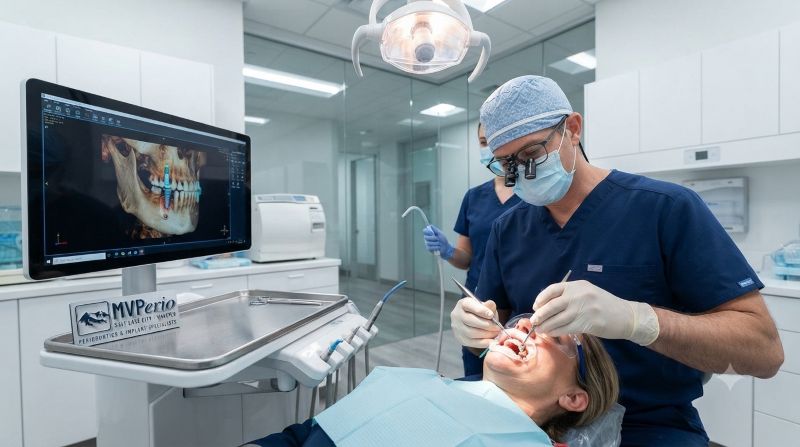
When an implant is part of your treatment plan, our dental implant services allow the surgical stages to be planned together, with attention to the bone and gum tissues supporting the implant.
If periodontal disease has contributed to bone loss, our periodontal disease therapy can address the underlying condition as part of your overall oral health plan.
We also provide extractions and regenerative care when a tooth cannot be predictably preserved and future bone and implant needs need to be considered.
If someone has told you that you need a graft or you are wondering whether bone loss could affect your implant options, we can evaluate your situation and explain your options clearly.
FAQs About Bone Graft Healing and Recovery
If you are preparing for a graft, it is natural to have questions about bone graft recovery, discomfort, diet, and when you can move forward with an implant. Here are some of the questions patients commonly ask.
Q. How long does a dental bone graft take to heal?
The initial recovery is often around one to two weeks, but the deeper bone-healing process can take several months. Your exact dental bone graft healing time depends on the size and location of the graft, the procedure used, and your individual healing response.
Q. How long does a bone graft take to heal before an implant?
There is no fixed waiting period for every patient. Some smaller grafts may be ready for implant placement after a few months, while larger or more complex grafts may need longer. Your periodontist will evaluate the graft and determine when there is enough stable bone for implant placement.
Q. Is a bone graft painful?
Some soreness, tenderness, and swelling are normal after the procedure. These symptoms generally improve during the first several days. Your doctor will provide instructions for managing discomfort and protecting the surgical site during bone graft recovery.
Q. How long does swelling last after a bone graft?
Swelling is usually most noticeable during the first few days and should gradually decrease. If swelling becomes significantly worse instead of improving, or if it occurs along with fever, severe pain, or discharge, contact your periodontist for an evaluation.
Q. What can I eat after a bone graft?
Soft foods such as yogurt, scrambled eggs, mashed potatoes, oatmeal, soft pasta, and other easy-to-chew foods are generally more comfortable during the early dental bone graft recovery period. Follow your specific dietary instructions and avoid foods that could disturb the surgical site.
Q. Can a bone graft fail?
Although complications can occur, your periodontist takes steps to evaluate the site, select an appropriate grafting technique, and monitor healing. Following your post-operative instructions and attending follow-up appointments are important parts of protecting the graft and identifying concerns early.
If you have questions about your own bone graft healing time, the most useful answer will come from an examination of your specific treatment site rather than a general timeline.
How MVPerio Can Help With Your Bone Grafting Treatment
At MVPerio, Dr. Hegde and Dr. Thunell take a careful, individualized approach to periodontal and implant-related treatment. We understand that patients want to know not only what procedure they need, but also what recovery will look like and when they can move forward.
If you’re considering a bone graft, recovering from one, or preparing for a dental implant, we can evaluate your situation and explain what the next step should be based on your specific needs.
Call MVPerio: +1 801-272-4867
Email: saltlakecity@mvperio.com
Address: 4252 S. Highland Dr., 101 Salt Lake City, Salt Lake City – 84124, Utah, USA
Your healing timeline should be based on your biology, your procedure, and your treatment goals, not an arbitrary deadline.