
Periodontal therapy is a treatment used to control gum disease, reduce inflammation, protect the bone supporting your teeth, and preserve natural teeth. Depending on the severity of the condition, treatment may include improved home care, professional deep cleaning, scaling and root planning, periodontal maintenance, or surgical treatment when necessary.
What Is Periodontal Therapy?
Periodontal therapy refers to treatment for diseases affecting the gums and the tissues and bone that support your teeth. The most common condition treated is periodontal disease, which can develop when bacterial plaque and tartar cause ongoing inflammation around the teeth.
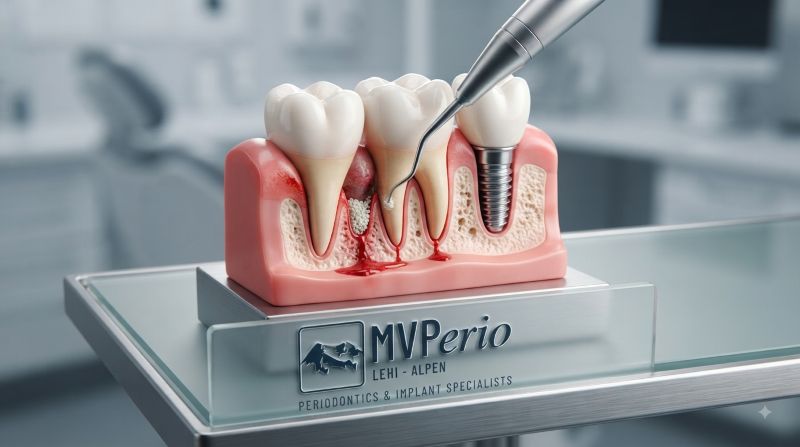
As inflammation progresses, bacteria can move below the gumline and create periodontal pockets. These spaces can become difficult to clean with regular brushing and flossing. Over time, the supporting bone and tissues around the teeth may be damaged.
The signs of periodontal disease can include:
- Bleeding when brushing or flossing
- Red, swollen, or tender gums
- Persistent bad breath
- Gum recession
- Deep spaces around the teeth
- Loose or mobile teeth
- Changes in your bite
- Bone loss visible on dental X-rays
These symptoms do not necessarily occur together. In fact, periodontal disease can sometimes progress without significant pain, which is why a proper periodontal examination is important when gum problems persist.
The goal of treatment is not simply to remove visible buildup. We want to control inflammation, reduce infection, protect the supporting structures of your teeth, and create a condition that can be maintained over time.
When Do You Need Periodontal Therapy?
You may need periodontal therapy when an examination shows that gum inflammation has progressed beyond what routine preventive cleaning can adequately manage. The appropriate treatment depends on the severity of the disease and the condition of the tissues supporting your teeth.
Treatment may be considered when you have:
- Persistent gum bleeding or inflammation
- Periodontal pockets that are deeper than normal
- Tartar deposits below the gumline
- Gum recession
- Loss of supporting bone
- Tooth mobility
- Recurrent gum infections
- Periodontal disease that has not improved with routine dental care
These findings help us determine whether active periodontal treatment is necessary. Not every patient needs the same level of care, and treatment should be based on what we find during your examination.
Why Early Evaluation Matters
Gum disease is easier to manage when it is identified before extensive damage occurs. Early evaluation gives us an opportunity to understand what is happening and decide whether conservative treatment can control the condition.
Depending on your findings, early care may involve:
- Improving brushing and interdental cleaning
- Professional plaque and tartar removal
- Scaling and root planning
- Periodontal maintenance
- Monitoring gum and bone changes
The purpose of these measures is to reduce inflammation and prevent the disease from progressing. We then assess how your gums respond before deciding whether additional treatment is needed.
What Treatments Are Used for Gum Disease?
Treatment for gum disease is not a single procedure. Your periodontal treatment plan depends on factors such as pocket depth, inflammation, bone loss, gum recession, and how your tissues respond to previous care.
Scaling and Root Planning
Scaling and root planning is a non-surgical treatment used to remove plaque, tartar, and bacteria from tooth surfaces and areas below the gumline. Root planning smooths the affected root surfaces so the gums have a better environment in which to heal.
This treatment may be recommended when there is:
- Bleeding and persistent gum inflammation
- Periodontal pocketing
- Tartar below the gumline
- Early signs of supporting bone loss
- Early or moderate periodontal disease
If you are searching for scaling and root planing in Lehi, a periodontal examination can help determine whether this treatment is appropriate for your condition.
Scaling and root planning can be effective for many patients, but it is not automatically the final step. We evaluate your response afterward to determine whether your gums are becoming healthier and whether further treatment is necessary.
Periodontal Maintenance
Periodontal maintenance helps protect the progress made after active periodontal treatment. Even when inflammation has improved, bacteria and tartar can accumulate again and contribute to recurring disease.
During maintenance appointments, we may monitor:
- Periodontal pocket depths
- Bleeding and inflammation
- Plaque and tartar levels
- Gum recession
- Tooth mobility
- Changes in supporting tissues
The purpose is to identify changes early and keep the disease under control. Your maintenance schedule is based on your periodontal condition and treatment response rather than a fixed schedule that applies to everyone.
Surgical Periodontal Treatment
Some patients have deep periodontal pockets, bone defects, or tissue problems that cannot be adequately managed with non-surgical treatment alone. In these situations, surgical treatment may be considered.
Depending on the condition, periodontal surgery may be used to:
- Access and clean deeper areas around the teeth
- Manage persistent periodontal pockets
- Address selected bone defects
- Support regeneration of certain damaged tissues
- Treat specific areas of gum recession
Surgery is not automatically required because you have periodontal disease. We consider it when clinical findings show that non-surgical treatment is unlikely to provide sufficient disease control.
Periodontal Treatment in Lehi: When Should You See a Specialist?
If you have persistent gum problems, have been diagnosed with periodontal disease, or have been told that you need deep cleaning or other periodontal care, a specialist evaluation can provide a clearer understanding of your condition. Periodontal treatment in Lehi should begin with an accurate assessment of your gums, teeth, and supporting bone.
You may benefit from seeing a periodontist if you notice:
- Frequent or unexplained gum bleeding
- Persistent swelling or tenderness
- Receding gums
- Loose teeth
- Persistent bad breath
- Changes in the position of your teeth
- A history of periodontal disease
- Bone loss identified on dental X-rays
- A previous recommendation for periodontal treatment
These signs do not tell us exactly what treatment you need, but they are reasons to have your periodontal health evaluated. A specialist can determine whether active treatment is necessary or whether monitoring and preventive care are sufficient.
What Happens During a Periodontal Evaluation?
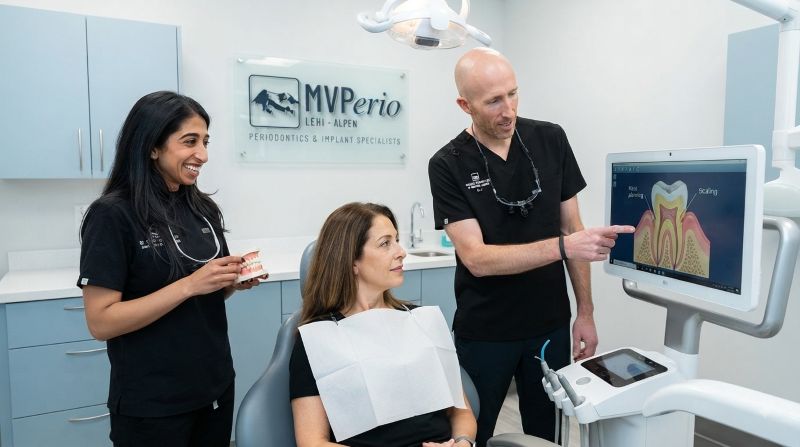
A periodontal evaluation looks at more than the visible appearance of your gums. We examine the tissues supporting your teeth and assess whether inflammation, pocketing, recession, or bone loss is present.
Your evaluation may include:
- Measuring periodontal pocket depths
- Checking for bleeding and inflammation
- Assessing gum recession
- Evaluating tooth mobility
- Reviewing dental X-rays or other imaging
- Examining supporting bone levels
- Discussing your dental history
- Reviewing previous periodontal treatment
These findings help establish the extent of the condition. They also allow us to explain your treatment options in practical terms, including what may happen if you choose monitoring, non-surgical care, or additional treatment.
For patients in the area, MVPerio’s Lehi location provides specialist periodontal and implant care.
Gum Disease Treatment Utah: What Are Your Options?
The right approach to gum disease treatment Utah patients need depends on the stage of periodontal disease and the condition of the tissues supporting the teeth. Some patients respond well to non-surgical treatment, while others may need more advanced periodontal care.
Treatment options can include:
- Professional periodontal cleaning
- Scaling and root planning
- Targeted antimicrobial care when appropriate
- Periodontal maintenance
- Surgical periodontal treatment
- Regenerative procedures in selected cases
- Gum grafting for certain types of recession
The important consideration is not choosing the most extensive treatment. It is choosing treatment that addresses the actual cause and severity of your periodontal problem.
How Treatment Is Selected
We consider several factors before recommending a treatment plan. These include the depth of periodontal pockets, amount of bone loss, gum recession, inflammation, tooth mobility, previous treatment, and your response to earlier care.
Your treatment plan may therefore look different from someone else’s, even if you have similar symptoms. A personalized approach allows us to focus on the areas that actually need attention.
How Do You Know Which Treatment Is Right for You?
There is no universal periodontal treatment plan. Two people can have bleeding gums but very different underlying conditions, so treatment needs to be based on clinical findings rather than symptoms alone.
We consider factors such as:
- The location and severity of gum disease
- Periodontal pocket depth
- Supporting bone levels
- Gum recession
- Tooth mobility
- Previous periodontal treatment
- Oral hygiene
- Tobacco use
- Relevant health factors
- Response to previous treatment
Looking at these factors together helps us determine whether non-surgical treatment, maintenance, or a more advanced procedure is appropriate.
The Goal Is Long-Term Stability
The purpose of periodontal care extends beyond improving your gums immediately after treatment. The longer-term goal is to control inflammation and maintain the tissues supporting your natural teeth.
Long-term care may include:
- Consistent brushing
- Cleaning between your teeth
- Regular periodontal maintenance
- Professional plaque and tartar removal
- Periodic monitoring of periodontal pockets
- Follow-up examinations when symptoms change
Your daily oral hygiene and professional maintenance work together. Keeping inflammation under control after active treatment is an important part of protecting your periodontal health.
DR. Hegde’s and DR. Thunell’s Clinical Perspective
When we evaluate a patient for periodontal therapy, we do not make decisions based on one symptom or one measurement. We look at the entire periodontal picture, including inflammation, pocket depths, gum tissue, supporting bone, tooth mobility, and how the condition has changed over time.
We also believe that patients should understand why a treatment is being recommended. If your condition can be managed conservatively, we want you to know that. If we see evidence that additional treatment is necessary, we explain what we are seeing and what that treatment is intended to accomplish.
Our approach is to begin with treatment that is appropriate to the severity of the disease and then evaluate the response. If the gums improve and remain stable, we can focus on maintenance. If significant disease remains, we discuss the next step based on your clinical findings.
We also encourage patients to ask questions before making a decision. Understanding your diagnosis, treatment options, expected benefits, and alternatives can make the process much easier.
If you have already received a periodontal diagnosis and are uncertain about the recommended treatment, seeking a second opinion can also be reasonable. Our role is to help you understand your options so you can make an informed decision about your oral health.
Frequently Asked Questions About Periodontal Therapy
Questions about gum disease often center on treatment, discomfort, recovery, and whether surgery is necessary. Here are some of the questions patients commonly ask when considering periodontal care.
Q. Is periodontal therapy the same as a regular dental cleaning?
No. A regular dental cleaning generally focuses on plaque and tartar that can be removed during routine preventive care. Periodontal treatment addresses active gum disease and may involve cleaning below the gumline, scaling and root planning, maintenance, or surgical treatment.
The appropriate approach depends on the health of your gums and supporting tissues.
Q. Does periodontal therapy hurt?
The level of discomfort depends on the procedure being performed and the extent of the periodontal problem. Local anesthesia can be used when appropriate to improve comfort during treatment.
Before treatment, we explain what you can expect so you have a clear understanding of the procedure and recovery.
Q. How do I know if I need scaling and root planning in Lehi?
Scaling and root planning may be recommended when an examination shows periodontal pockets, inflammation, or plaque and tartar below the gumline.
A periodontal evaluation is necessary to determine whether it is appropriate for you and whether additional treatment may be needed afterward.
Q. Can gum disease be treated without surgery?
Many patients can initially be treated without surgery. Depending on the severity of the disease, non-surgical treatment may include professional cleaning, improved home care, and scaling and root planning.
If deep pockets or tissue and bone problems remain after non-surgical treatment, additional procedures may be considered.
Q. How often will I need periodontal maintenance?
There is no single schedule for every patient. Your maintenance interval depends on your periodontal history, current condition, treatment response, and individual risk factors.
Your periodontist will recommend a schedule based on your clinical findings and adjust it when necessary.
Q. Can periodontal disease progress without pain?
Yes. Periodontal disease does not always cause significant pain, particularly during its earlier stages. Some patients notice bleeding, recession, bad breath, or changes around their teeth instead.
For this reason, persistent gum changes should be evaluated even if you are not experiencing discomfort.
Making an Informed Decision About Your Gum Health With MVPerio
Being told that you need periodontal treatment does not mean you have to make a decision without understanding your condition. A detailed periodontal examination can show what is happening around your teeth and help identify the most appropriate level of care.
At MVPerio, Dr. Hegde and Dr. Thunell focus on explaining the clinical findings and helping patients understand why a particular treatment is being recommended. Whether you were referred by your dentist, have noticed changes in your gums, or want a second opinion, the goal is to give you clear information that supports a thoughtful decision.
If you would like to discuss your periodontal health with our Lehi team:
MVPerio – Lehi
Phone: +1 801-766-6966
Email: lehi@mvperio.com
Address: 3397 N 1200 E STE 111, Lehi, UT 84043, Utah, USA
A periodontal evaluation can help determine whether treatment is needed, which options are appropriate, and how you can maintain healthier gums and supporting tissues over the long term.
Reviewed by Dr. Hegde and Dr. Thunell
Board-Certified Periodontists, MVPerio
This article is intended for general educational purposes and does not replace an individual periodontal examination, diagnosis, or treatment recommendation.