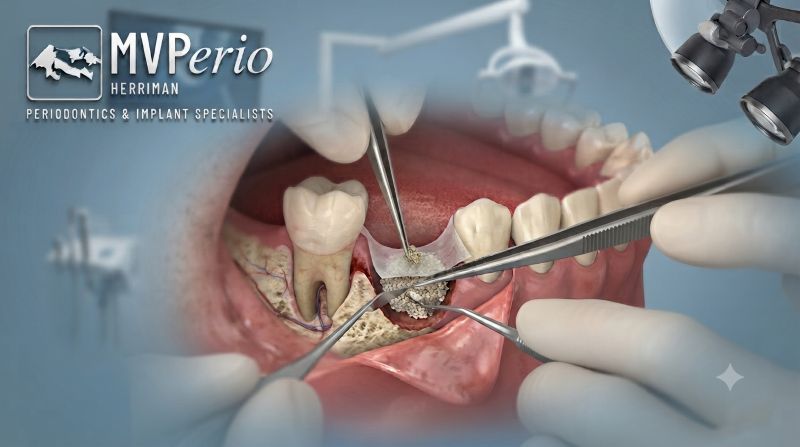
What is regenerative bone grafting? It is a dental procedure that rebuilds lost jawbone using biocompatible grafting materials and your body’s natural healing process. By encouraging new bone growth, regenerative bone grafting helps create a stable foundation for teeth, dental implants, and long-term oral health.
Bone loss in the jaw can occur for several reasons, including advanced gum disease, tooth loss, trauma, or infection. As the bone gradually shrinks, it may affect your ability to chew comfortably, alter facial appearance, and limit future treatment options such as dental implants. Modern regenerative techniques allow us to restore lost bone predictably, helping preserve both function and appearance.
What Is Regenerative Bone Grafting and Why Is It Needed?
Regenerative bone grafting is a procedure designed to replace or rebuild areas of the jawbone that have been damaged or lost. Rather than simply filling an empty space, the graft acts as a framework that encourages your body to produce new, healthy bone tissue over time.
You may benefit from regenerative bone grafting if you have:
- Bone loss caused by periodontal (gum) disease
- Missing teeth that have led to jawbone shrinkage
- Bone defects following tooth extraction
- Jawbone damage from injury or infection
- Insufficient bone volume for dental implants
When the jawbone is restored, it provides better support for surrounding teeth and creates a stronger foundation for future restorative treatments.
Understanding the Regenerative Bone Grafting Procedure
Many patients are surprised to learn that the regenerative bone grafting procedure is carefully planned and tailored to the amount of bone loss present.
Comprehensive Examination
We begin with a detailed periodontal evaluation, digital X-rays, and, when needed, 3D CBCT imaging to assess the quality and quantity of your existing bone.
Bone Graft Placement
After numbing the treatment area, the damaged site is thoroughly cleaned. The bone graft material is then placed where regeneration is needed. Depending on your clinical situation, we may also use a protective membrane to support healing and guide new bone formation.
Healing and Bone Formation
Over the following months, your body gradually replaces the graft material with natural bone through a process known as dental bone regeneration. This creates a stronger and healthier jaw structure that can support surrounding teeth or future dental implants.
Healing times vary depending on the size of the graft and your overall health, but many patients can return to normal daily activities shortly after treatment.
Types of Bone Grafting Materials Used
Several grafting materials can be used, depending on your individual needs.
Autograft
Bone is taken from another area of your own body. Because it contains your own living cells, it offers excellent healing potential.
Allograft
Processed donor bone is commonly used and has a long history of safe, successful use in periodontal procedures.
Xenograft
This graft material is derived from animal sources and serves as a natural scaffold for new bone growth.
Synthetic Bone Grafts
Modern synthetic materials are designed to encourage bone regeneration while gradually integrating with your natural bone.
During your consultation, we explain which option is most appropriate based on your diagnosis, treatment goals, and medical history.
Benefits of Dental Bone Regeneration
Rebuilding lost bone offers benefits that extend beyond preparing for dental implants.
These include:
- Restoring jawbone strength
- Supporting long-term gum health
- Preserving facial structure
- Improving stability for future restorations
- Reducing the progression of bone loss
- Increasing the success of implant treatment
When bone loss is treated early, it can also help preserve the health of neighbouring teeth.
Regenerative Bone Grafting Herriman: Personalized Periodontal Care at MVPerio
Patients considering regenerative bone grafting Herriman often ask whether treatment is only necessary before dental implants. In reality, bone regeneration is also recommended to treat periodontal bone defects and preserve natural teeth whenever possible.
At MVPerio, every treatment plan begins with a comprehensive periodontal evaluation. We focus on identifying the underlying cause of bone loss before recommending the most appropriate regenerative approach. Our goal is to restore healthy supporting structures while helping patients maintain comfortable function for years to come.
Dr. Rachna’s and Dr. Dan’s Clinical Perspective
One of the most rewarding aspects of periodontal care is seeing the body’s ability to heal when the right environment is created. Bone regeneration is not simply about replacing lost tissue, it’s about preserving your natural smile whenever possible and creating healthier conditions for long-term oral health.
Every patient experiences bone loss differently. Some require treatment to stabilise gum disease, while others need additional bone support before dental implant placement. We carefully evaluate the quality of your existing bone, discuss every available option, and recommend treatment only when it provides a clear long-term benefit for your oral health.
Frequently Asked Questions
Patients often have practical questions about regenerative bone grafting before deciding on treatment. Here are some of the most common ones we hear during consultations.
Q. Is regenerative bone grafting painful?
The procedure is performed using local anaesthesia, so you should remain comfortable throughout treatment. Mild soreness afterwards is common and usually improves within a few days with prescribed or over-the-counter medications.
Q. How long does bone regeneration take?
Most patients require several months for complete healing. The exact timeline depends on the size of the graft, the location being treated, and individual healing capacity.
Q. Can bone grafting save my natural teeth?
In many cases, regenerative procedures can help preserve teeth affected by periodontal bone loss when combined with appropriate gum disease treatment and ongoing maintenance.
Q. Is regenerative bone grafting always required before dental implants?
Not always. Some patients already have sufficient bone volume, while others may benefit from grafting to improve long-term implant stability. A clinical examination and imaging help determine the best approach.
Q. How successful is dental bone regeneration?
When performed in appropriate clinical situations and supported by good oral hygiene and regular periodontal care, regenerative bone grafting has a high success rate and can provide lasting improvements in oral health.
Talk to Dr. Rachna Hegde and Dr. Dan Thunell About Your Bone Health
If you’ve been told you have jawbone loss or you’re considering dental implants, we’d be happy to help you understand your options. We’ll carefully evaluate your oral health, explain whether regenerative bone grafting is appropriate for your situation, and answer every question so you can make an informed decision with confidence.
Phone: +1 801-871-3949
Email: herriman@mvperio.com
Address: 6351 West 13400 South #200, Herriman, UT 84096
About MVPerio
At MVPerio, Dr. Rachna Hegde and Dr. Dan Thunell provide evidence-based periodontal care with a focus on preserving natural teeth and restoring long-term oral health.